
Last Thursday, about $2.5 trillion of market value vanished in a single day. Nvidia fell more than 9%, its worst day since April 2025. The Nasdaq closed in correction. Midterm results and AI-spending fears hit at once, and one word came back everywhere: bubble.
Maybe. But we have watched this film before.
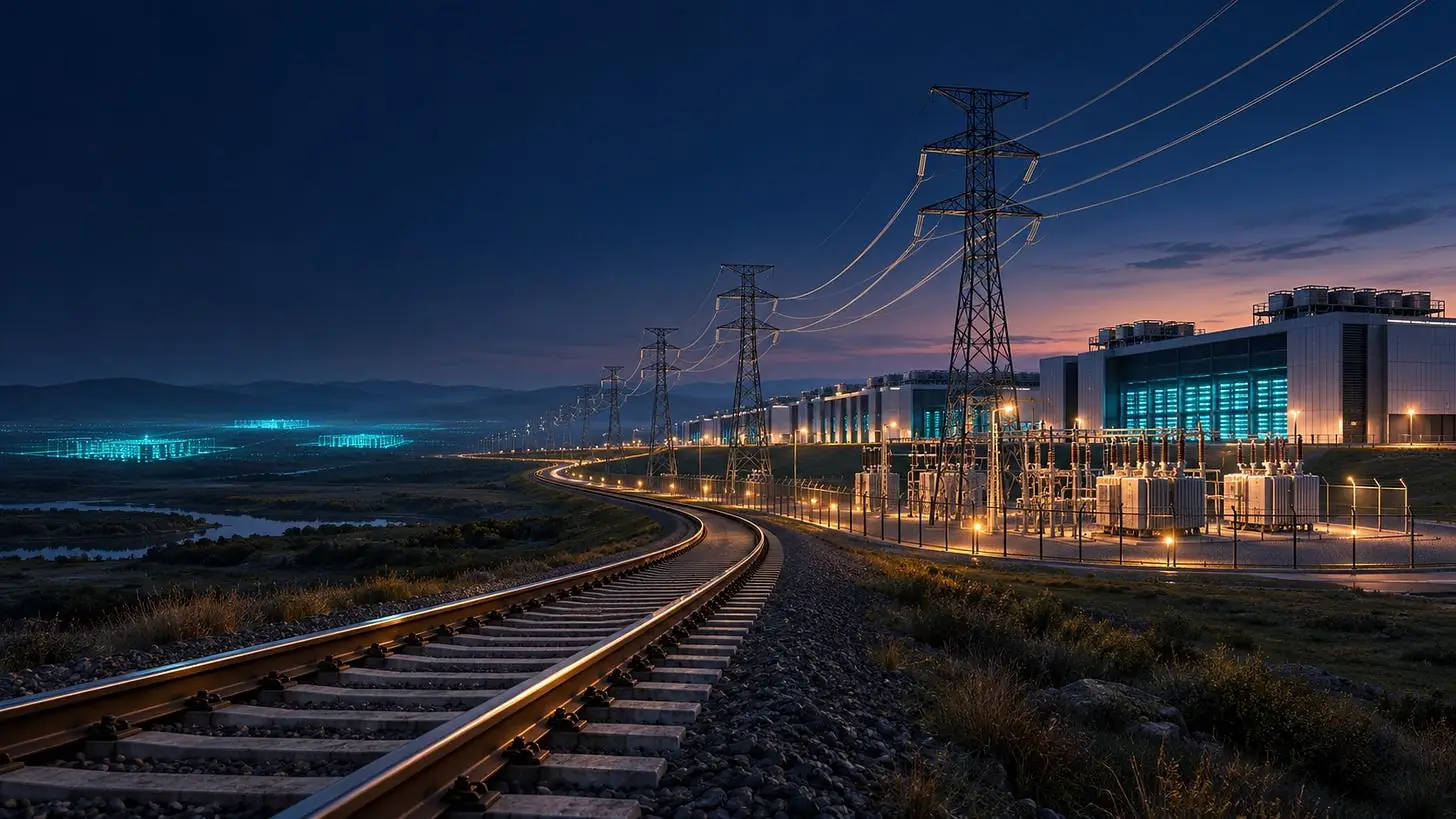
In 1847 the railway shares collapsed. The track stayed.
After 1929 the utility empires collapsed. The power lines stayed.
In 2001 the fibre companies collapsed. The glass stayed in the ground, and Google, Amazon and YouTube were built on top of it.
Every time this happens, the same argument comes back. AI is next. Nvidia is the railway share. The bust is coming. Something bigger will grow out of the wreckage.
It is half right. The half it gets wrong is the half that matters to anyone who builds data centres.
This time, the most expensive thing in the boom is the thing that won’t last.
A disclosure before we go further: I lead NextGenergy, which works on power, cooling and commissioning for AI data centres. I have a stake in this build-out. Nothing here is investment advice.
Bubbles build. Investors pay.
Carlota Perez mapped this pattern in Technological Revolutions and Financial Capital. First comes the installation period: money floods into new infrastructure, prices detach from earnings, and it ends in a crash. Then comes deployment: the slow, profitable work of rebuilding the economy on top of what was built.
Three rules hold across every cycle.
The builders usually lose. The infrastructure stays. After 2001, most of the long-haul fibre in America sat dark. The famous claim that only 2% to 5% was lit is disputed. The outcome is not: too much capacity, collapsing prices, new owners, and a decade of businesses built on bandwidth that cost almost nothing.
The users take the biggest prize. Coca-Cola, founded in 1886, became a national brand because the railways had already been paid for. Google was built on cheap bandwidth. Ford rebuilt the factory around the electric motor.
Deployment takes decades. The economist Paul David found that electricity took roughly forty years to show up in factory productivity. Owning a dynamo was not enough. Factories had to be redesigned around it.
But the rule is not that early players always die. Amazon went public in the middle of the dot-com boom, fell about 94%, and became the defining company of the internet era.
Cisco was the most valuable company on earth in March 2000. Its shares did not close above that peak until December 2025. Twenty-five years. The company survived. Its shareholders waited a generation.
Why this isn’t 1999
The buyers are rich. In 1999 the build-out was funded by unprofitable start-ups and telecom debt. In 2026 it is funded by Microsoft, Alphabet, Amazon and Meta. Their combined capital spending this year is tracking at roughly $720 billion to $745 billion, depending on how you count. Most of it is paid from businesses that print cash.
The multiples are lower. Cisco peaked at well over 100 times earnings. Nvidia’s forward P/E has mostly sat in the twenties to thirties this year. That does not make it cheap. It does make the “Nvidia is Cisco” chart lazy.
The chips are busy. In 2001 most fibre sat dark. Today GPUs are still hard to get in parts of the market, and some providers raised H100 prices in 2026. Rental prices are a noisy signal. But they are not screaming glut.
Why it still rhymes
Follow the money, not the share price.
The debt is moving off the balance sheet. Meta’s Hyperion campus in Louisiana is about $27 billion of buildings and infrastructure, placed in a joint venture where funds managed by Blue Owl own 80%. Meta keeps 20%, leases the campus, and gives a capped residual-value guarantee. Mostly off the balance sheet. Still partly on the hook. Neoclouds such as CoreWeave have grown on heavy borrowing.
The money goes round in circles. Nvidia says it intends to invest up to $100 billion in OpenAI. OpenAI plans to deploy up to 10 GW of Nvidia systems. Money goes out as investment and comes back as orders. It may all work. But count it once, not twice.
Spending is running ahead of revenue. In 2024 Sequoia’s David Cahn called it “AI’s $600 billion question”: how much the application layer must earn to pay for all this. Spending has grown much faster since.
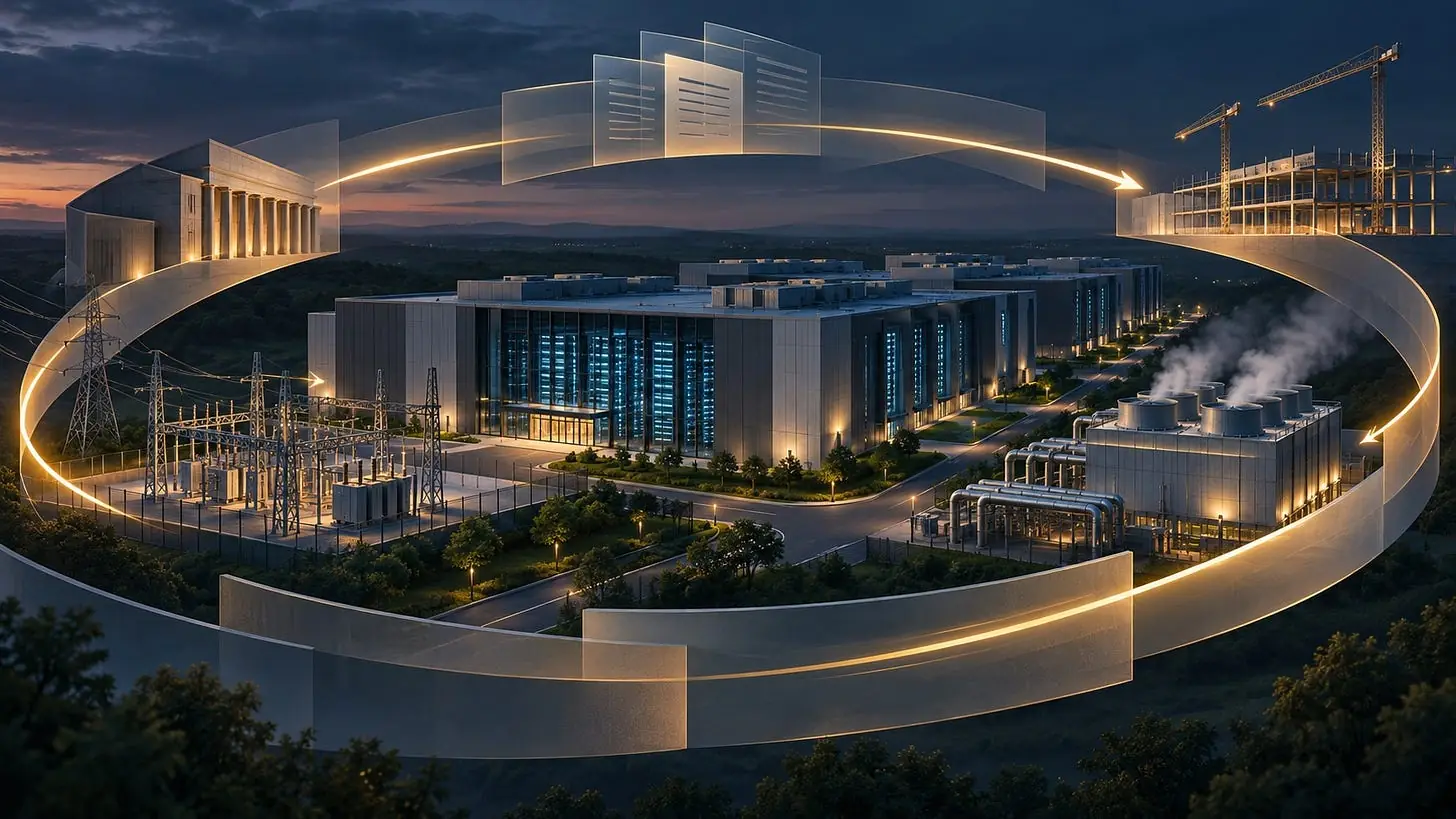
None of this proves a crash. It proves the build-out is now a financing system as much as a technology system. The test is simple: does each layer still work if utilisation disappoints, rates rise or a tenant delays its ramp?
The chip is not the rail
Here is where the analogy breaks.
Railway track lasts decades. Fibre lasts twenty-five years. When those bubbles burst, the world inherited cheap, long-lived infrastructure.
A GPU’s economic life is measured in years. Every new generation reprices the last one.
So if this bubble bursts, the wreckage will not be cheap compute. It will be fast-depreciating chips bolted into very valuable buildings.
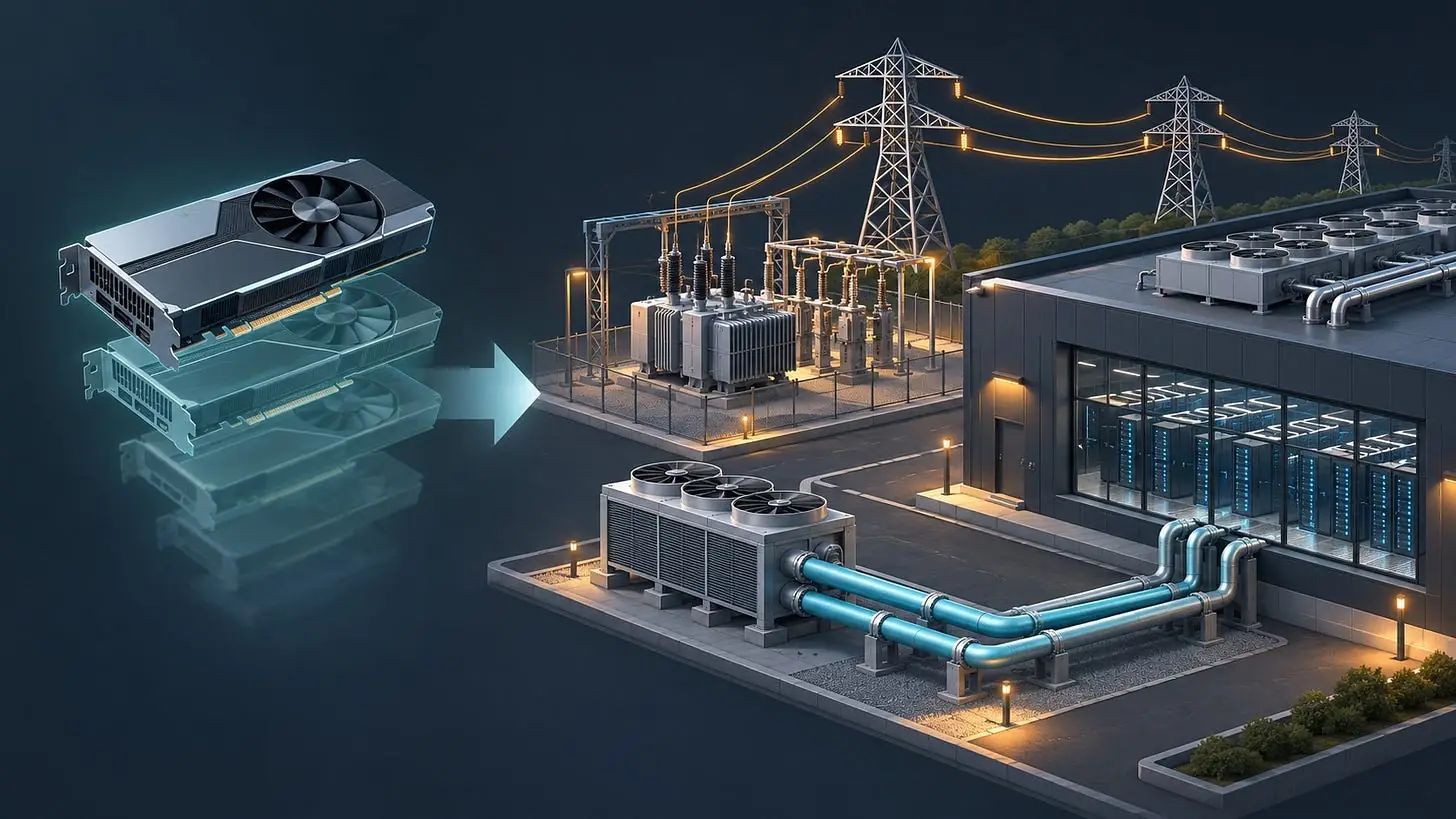
The rails of this cycle are everything around the chip:
-
the grid connection
-
the substation
-
the permitted building
-
the cooling plant
-
the proof that it all carries load together
Those will outlast three generations of GPUs. But only if they work. A substation with no transferable power right, a hall that can’t cool the next rack, a campus with no commissioning record: that is not a bargain. It is a write-down waiting for a buyer.
Where AI’s Coca-Cola will come from
If the pattern holds, the biggest winners will be the companies that put cheap intelligence to work. Five places to look:
-
Firms that sell finished work. Finance, legal, customer service, claims. Priced per outcome, not per seat.
-
The new front door. Whoever owns where people start a task holds the seat Google held in search.
-
Science and engineering. Drugs, materials, chip design, simulation. Wherever an experiment is slow and expensive.
-
Robots. Slower than software. A far bigger prize. They are to AI what the car and the washing machine were to electricity.
-
Ten-person companies doing the work of five hundred. The biggest change, and the hardest to pick.
One twist from history: this time the incumbents are paying for the rails themselves. Expect incumbents plus a new generation, not a complete changing of the guard.
Five signals, not a date
Nobody can time a crash. I won’t try. Watch these instead:
-
Hyperscalers cut capex guidance. Their spending is Nvidia’s revenue.
-
Like-for-like GPU contract prices slide. Committed capacity, not one marketplace quote.
-
Neocloud financing turns punitive. Refinancing, collateral values, customers walking from take-or-pay contracts.
-
Chips arrive before the power does. A GPU is not revenue until power, cooling, controls and network are proven together.
-
Token prices fall and revenue doesn’t follow. Cheaper intelligence, no new demand.
My base case is not one clean 2000-style collapse. It is a series of sharp corrections, with very different outcomes across the stack. The platforms can keep spending while their core businesses print cash. The danger sits with leveraged neoclouds and the private credit behind them.
And a falling share price does not stop the building. After 2001, fibre kept going into the ground. It just changed owners.
If you build data centres
A correction hits the shovel sellers first, because capex is the first line cut.
But physics doesn’t correct. The power, cooling and buildings will still be there. They keep their value only if they can be finished, transferred and accepted fast.
That changes the work worth doing now:
-
Build the acceptance evidence early. Prove the chain from utility power to IT load, including how the cooling and controls respond when the load steps.
-
Underwrite the customer, not the megawatts. Deposits, milestones and step-in rights matter more when the tenant runs on borrowed money.
-
Design for the second tenant. The best distressed asset is the one that can take a new tenant, a new rack density or a new cooling architecture without reopening the hall.
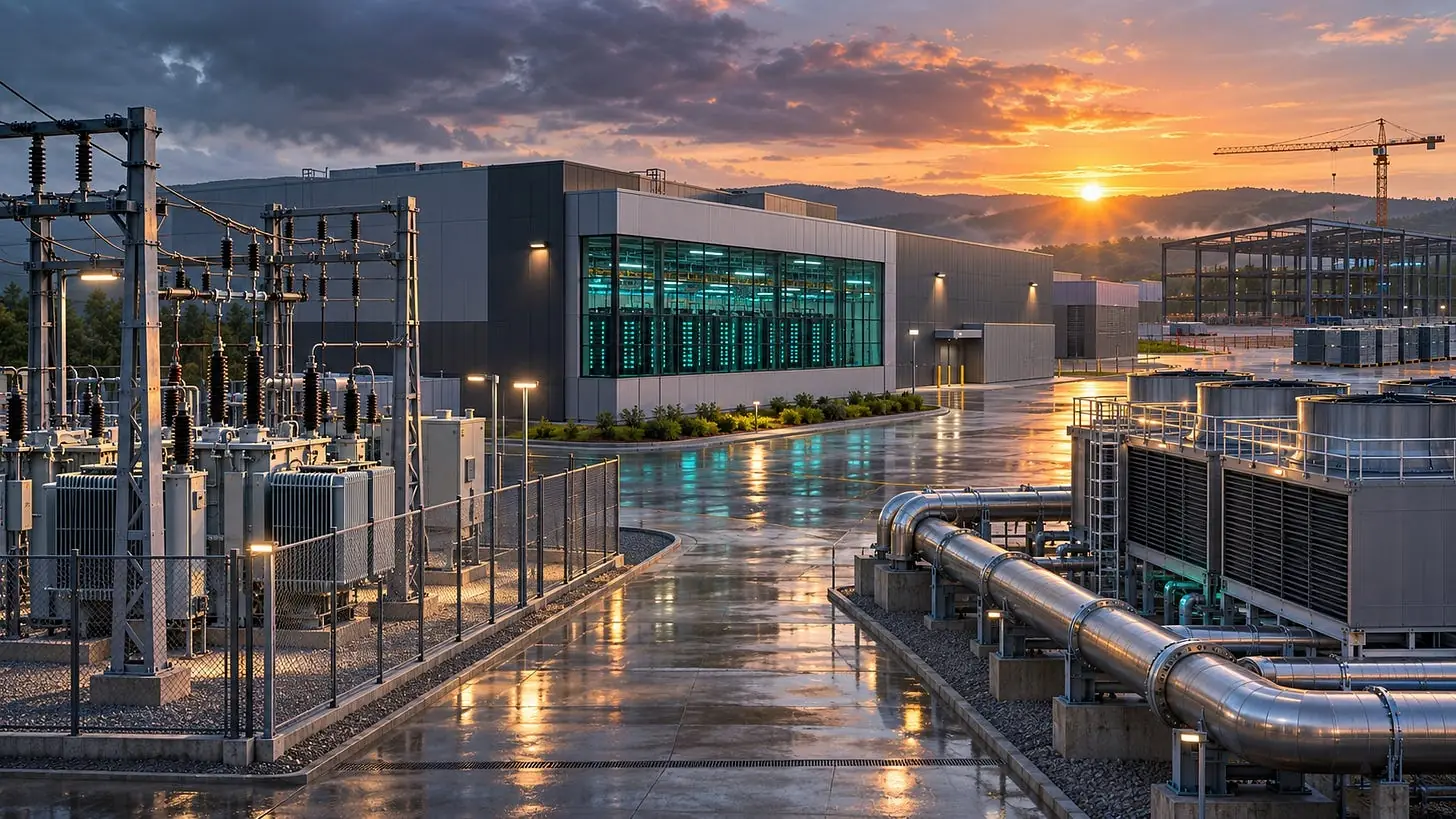
The bubble lays the rails. The money that paid for them may never come back. The rails will still be there.
The question is who will be standing on them, with the power on and the load accepted.
Which do you think is most exposed if the correction comes: the chipmakers, the neoclouds, or the developers building on spec?
— Jim Li, founder of NextGenergy, focuses on power, cooling, and energy reuse for AI compute infrastructure. He is working to move next-generation AI data centers beyond single-point equipment optimization toward integrated system design across power, liquid cooling, and heat recovery.
Further reading
· Carlota Perez, Technological Revolutions and Financial Capital (Edward Elgar, 2002).
· Paul A. David, “The Dynamo and the Computer,” American Economic Review 80(2), 1990.
· USITC: excess and dark fibre in the telecom downturn
· Barchart: Cisco hits a record high for the first time since the dot-com era
· TMT Finance: 2026 hyperscaler capex tops $700bn
· Motley Fool: Nvidia’s forward P/E, July 2026
· GPU Economy: cloud GPU price index and methodology
· Meta: Hyperion joint venture with funds managed by Blue Owl Capital
· Bisnow: Meta pushes its largest data center project off its books
· Nvidia: OpenAI and Nvidia strategic partnership
· CNN: tech sell-off wipes $2.5 trillion, Nov 5, 2026
· NBC News: stocks plunge as election outcome and AI worries crush tech shares
· Sequoia Capital: AI’s $600B Question
Earlier in this newsletter:
· Power Is the Real Ceiling — and the Fastest Megawatt Is Already Plugged In
· Open Weights Are Only the Beginning: Expensive Tokens and Scarce Megawatts
· Three AI Rivals Called for a Slowdown. Here Is What Our Side of the Industry Owes.
By Jim Li, founder of NextGenergy. First published on Substack. Discuss it there or on LinkedIn. Markdown version.